how to keep bread fresh (and what works in an australian summer).
by the crummy. team
updated 10 min read
35% ai-written
ai helped the crummy. team write this guide. we planned it, edited it and had the final say.
There's a particular kind of sad that comes from reaching for the last of a good loaf and finding it's gone hard enough to prop a door open. Or furry.
We sell bread bags, so you'd expect us to say a bread bag fixes everything. It doesn't. Keeping bread fresh comes down to where you keep it, what you keep it in, and knowing when to hand it over to the freezer. This guide covers all three, written for Australian kitchens, where a Brisbane February and a Hobart July are two very different bread problems.
why bread goes stale (it's not drying out).
Bread goes stale because its starch firms up as it cools, not because it dries out.
In the oven, starch soaks up water and turns soft. That's the springy crumb. As the loaf cools, the starch slowly packs back into firm crystals. Bakers call it retrogradation. You call it Tuesday's bread.
In 1852, French chemist Jean-Baptiste Boussingault sealed a loaf so no moisture could escape. It went stale anyway. When he heated it, it came good again. That's why a tired loaf revives in a hot oven, and why the fridge is the worst place for bread: staling runs fastest at fridge temperature.
Three things are working against your loaf:
- Staling. Starch firming up. Fastest in the fridge, close to stopped in the freezer.
- Drying out. Moisture escaping through the crust and the cut face. A good bag or bread box slows it.
- Mould. Loves warmth and damp. In a humid summer, it usually gets there first.
Everything below tackles all three.
how long does bread last?
On the bench, most bread lasts 2 to 5 days. A good sourdough stored well stays fresh for up to 7 days. In the freezer, any loaf keeps its best for about 3 months.
| bread | bench, cooler months | bench, hot and humid | freezer |
|---|---|---|---|
| Sourdough, cut-side down in a bread bag | Up to 7 days | 2 to 4 days | About 3 months |
| Supermarket sliced, in its own bag | 2 to 5 days | 2 to 3 days | About 3 months |
| Bakery white or wholemeal | 2 to 3 days | 1 to 2 days | About 3 months |
| Baguettes and crusty rolls | Best on the day | Best on the day | About 3 months |
Supermarket bread usually outlasts bakery bread because of preservatives. The 282 on the label is calcium propionate, and its job is slowing mould. Sourdough gets a similar head start from its natural acidity, which is why a proper sourdough tends to outlive a plain white loaf from the same bakery. Homemade yeasted bread has neither, so eat it sooner or freeze it earlier. Love Food Hate Waste NSW puts sliced bread at 2 to 5 days in its wrapper.
how to store bread on the bench.
Store bread at room temperature, somewhere cool and shady, in something that suits the loaf. The bench is home base for anything you'll finish this week. Keep it away from the oven, the kettle and that sunny patch by the window.
supermarket sliced bread.
Leave it in the bag it came in. Squeeze out the air, twist the top and close it with the tag or a clip. Sliced bread is made to be soft, so plastic suits it. A bread box works too, if your household loses bread tags faster than it eats bread.
Keep the heel on the end as a lid for the rest of the loaf, even if nobody in your house will admit to eating it.
how to store sourdough bread (and other crusty loaves).
If you've named your starter, this bit's for you.
Crusty bread wants two things that pull in opposite directions: a crisp crust and a soft crumb. Plastic keeps the crumb soft and turns the crust leathery. Paper keeps the crust crisp and dries everything else out by tomorrow. To keep sourdough fresh, you want the middle ground.
- Let it cool completely. At least an hour, two if you can stand it. A warm loaf in a bag steams itself soggy.
- Keep the cut face covered. On day one, stand the loaf cut-side down on a board. The crust protects the rest of the loaf and the board seals the open face.
- Then bag it or box it. Move it, still cut-side down, into a breathable bag or a bread box. A beeswax-lined bag like a crummy holds in enough moisture to keep the crumb soft while the crust stays crisp. Stored like this, a good sourdough stays fresh for up to 7 days in cooler weather.
- Slice as you go. A whole loaf keeps better than a pre-sliced one.
storing bread in a hot, humid australian summer.
From December to March in Brisbane, Sydney or Darwin, mould beats staling to your loaf, and it moves fast.
- Find the coolest spot. A pantry shelf beats the bench by the window.
- Never bag bread warm, and don't seal crusty bread in plastic. Heat plus trapped moisture is exactly what mould is after.
- Freeze sooner. In a sticky week, plan on 2 to 4 days for a sourdough and freeze the rest on day one or two.
Dry heat flips the problem. In a Perth or Adelaide summer, bread dries out before it gets the chance to go mouldy, so a bag that holds in moisture earns its keep.
the best way to store bread: bag, box or wrap?
For crusty bread and sourdough, a breathable bag or a bread box. For soft sliced bread, its own plastic bag. For anything you won't eat this week, the freezer. The fridge is never the answer.
-
the fridge.
no.
bread goes stale faster in the fridge than on the bench. leave it out.
-
the freezer.
yes.
for anything you won't eat this week. slice it first, then toast it straight from frozen.
-
a plastic bag.
kind of.
keeps the crumb soft. softens the crust too.
-
the paper bag.
for today.
perfect for the walk home. dries out fast after that.
-
a tea towel.
nice try.
lovely. keeps sliding off.
-
a crummy.
this week's loaf.
roll the top down, clip it shut, leave it on the bench. freeze the rest.
| option | good for | the catch |
|---|---|---|
| Fridge | Nothing, really | Bread goes stale faster in the fridge than on the bench. Leave it out. |
| Freezer | Anything you won't eat this week | Slice it first, or you'll be chiselling. |
| Plastic bag | Soft sliced bread | Keeps the crumb soft. Softens the crust too, and sweats in humid weather. |
| Paper bag | The walk home | Crisp crust today, dry bread tomorrow. |
| Tea towel | Day one on the bench | Lovely. Keeps sliding off. |
| Linen bag | Crusty loaves you'll finish in a day or two | Breathes well, but dries bread out faster than a lined bag. |
| Bread box | Households that get through a few loaves a week | Needs a crumb clean-out every week or two. |
| Beeswax-lined bag, like a crummy | Sourdough and crusty loaves you'll eat this week | It's a bag, not a time machine. Freeze what you won't get to. |
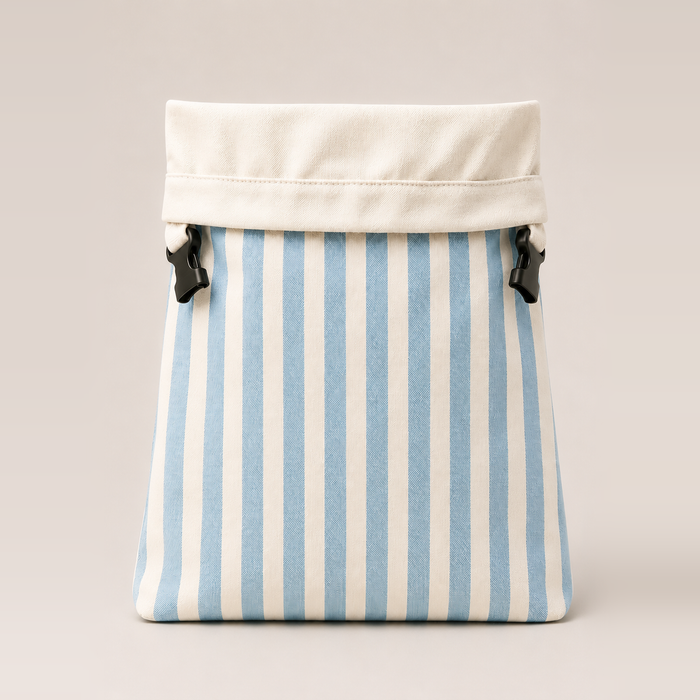
our bag, briefly.
The crummy bread bag is lined with beeswax, rolls down to fit whatever loaf you've got and clips shut on the bench. It's 34 x 43 cm, so a big sourdough fits without a squeeze. Try it for 30 days, and if it's not for you, send it back.
from $49 $60
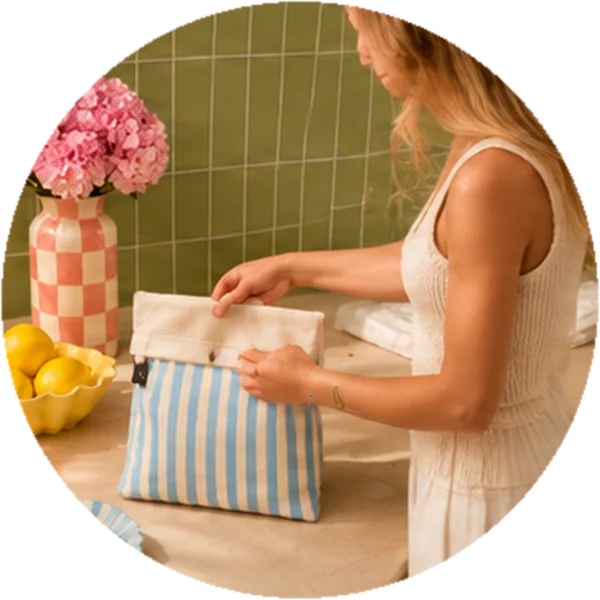 bag it.
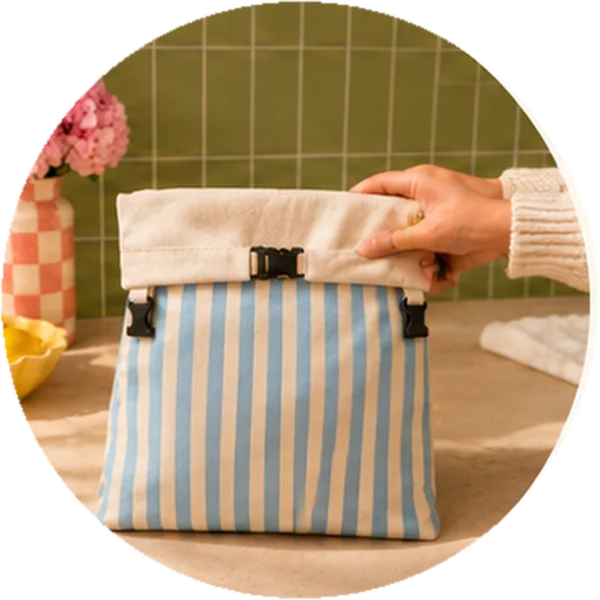 clip it.
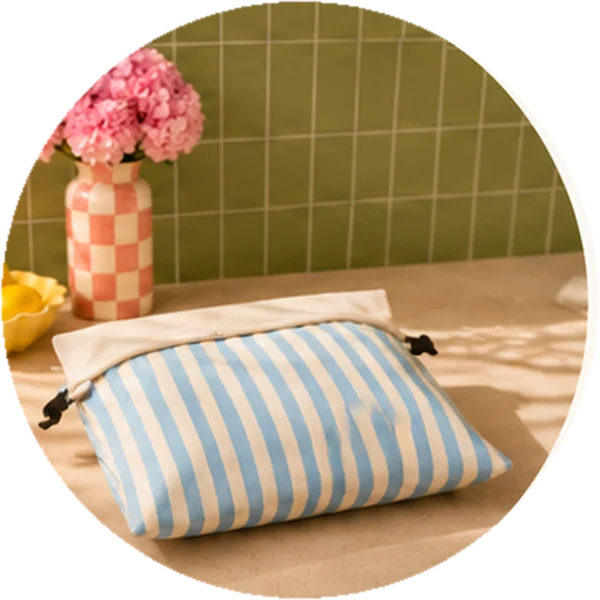 bench it.
how to care for a beeswax bread bag.
- Shake out the crumbs after every loaf.
- Wipe it with a damp cloth, or rinse it in cool water with a little mild soap.
- Air dry it completely before the next loaf goes in.
- Skip hot water, the washing machine and the dishwasher. Heat softens the beeswax lining.
- Wash it straight away after a mouldy loaf, so the spores don't move in with the next one.
how to freeze bread (properly).
Freezing is the best way to keep bread for longer than a week. We sell bread bags, and we'll still tell you to freeze half your loaf.
The freezer stops staling almost completely, so bread that goes in fresh comes out tasting fresh. How long can you freeze bread? About 3 months for the best taste. It stays safe for longer, but it slowly dries out and picks up that faint freezer flavour.
One rule to remember: freezing doesn't rescue bread. It pauses it. Freeze on day one or two, not the day before it turns.
freezing sliced bread.
- Let homemade bread cool completely first.
- Slice it, pack the slices into a freezer bag and press out as much air as you can. Air is what causes freezer burn.
- If your slices fuse into a brick, slip a square of baking paper between every few.
- Write the date on the bag. Future you won't remember.
freezing a whole sourdough loaf.
- Cut it into halves or quarters first, so you only thaw what you'll eat.
- Wrap each piece tightly in foil, then seal it in a freezer bag.
- To thaw, leave it wrapped on the bench for a few hours (overnight for a whole loaf) so the moisture settles back into the crumb. Then give it 5 to 10 minutes in a 180°C oven (160°C fan) to wake the crust up.
how to defrost bread and toast it from frozen.
- Toast: straight from the freezer into the toaster. Use the defrost button (usually a snowflake) if yours has one, or give it an extra minute. Nobody will know.
- Sandwiches: leave frozen slices on the bench for 20 to 30 minutes. Or make the sandwich with frozen bread in the morning, and it'll be thawed by lunch.
- A half or whole loaf: thaw it wrapped, then crisp it in the oven as above.
how to tell if bread has gone off.
If you can see mould, bin the whole loaf. Don't cut the spots off.
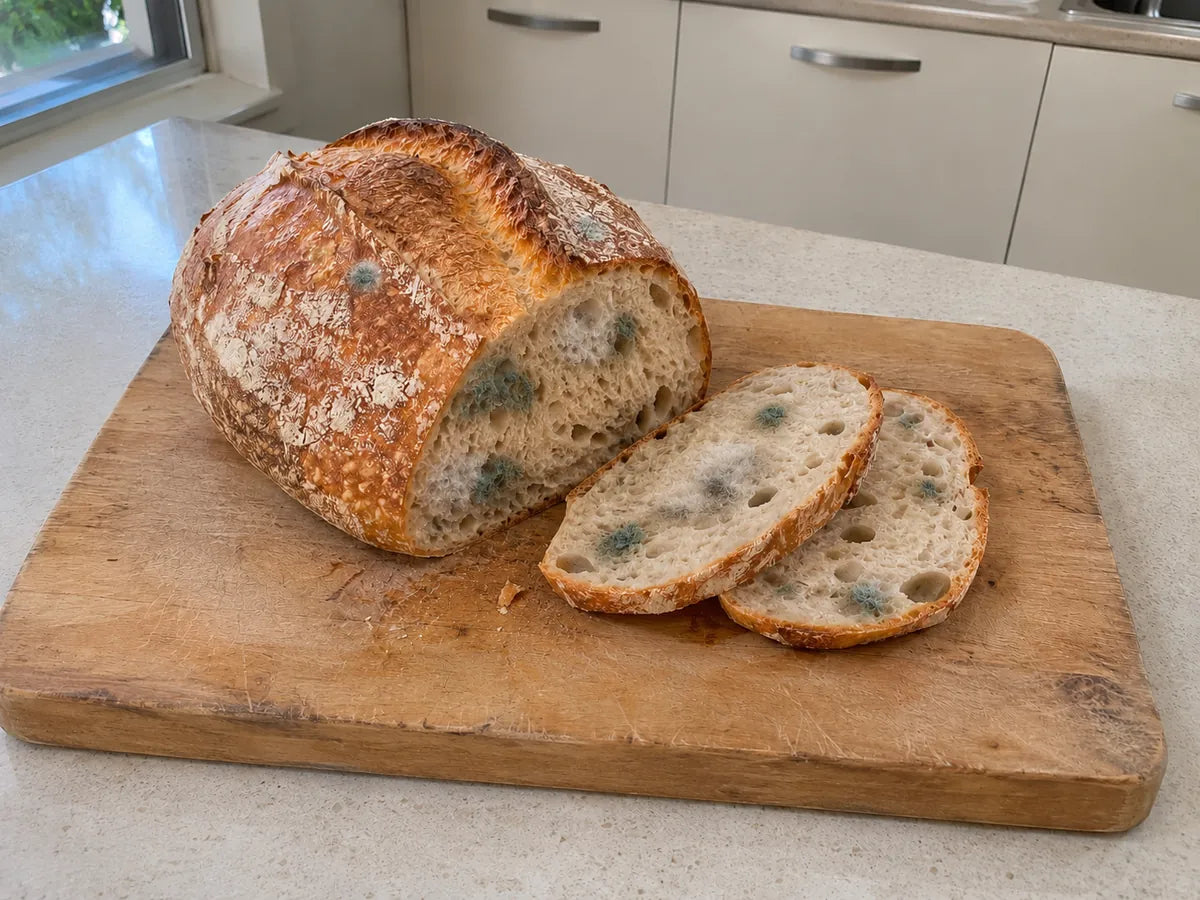
- Bread mould shows up as fuzzy spots of green, blue, white or black, often on the base or the cut face first.
- A musty smell when you open the bag, the not-sourdough kind, is another giveaway.
- Hard, dry and crumbly with no spots? That's stale, not off. Stale is fine. Stale is toast.
Why the whole loaf? Bread is soft and full of air pockets, so mould sends its roots well past the spots you can see. Food safety agencies, including the USDA, say to throw mouldy bread out rather than cut around it.
And if you can see mould, don't sniff it to check. We know. Everyone sniffs it. Breathing in spores isn't good for you, so skip that step. Then clean whatever the loaf was stored in before the next one moves in.
common bread storage mistakes (we've made all of them).
- Bagging it warm. We get it, it smells incredible. But a warm loaf sweats in a bag and mould gets a head start.
- The fridge. It feels responsible. It ages bread faster than the bench does.
- Leaving the cut face up. That's the loaf's biggest weak spot, open to the air all day.
- Slicing the whole loaf on day one. More cut surfaces, more drying. Slice as you go, unless it's freezer-bound.
- Freezing too late. Stale bread goes into the freezer and comes out as stale bread.
- Never cleaning the bread box. Old crumbs are a buffet for mould.
- Sealing crusty bread in plastic in summer. Leathery crust, sweaty bag, short life.
bread storage FAQs.
What is the best container for keeping bread fresh?
For crusty bread and sourdough, a breathable bag or a bread box. Both keep the crumb soft without turning the crust leathery. For soft sliced bread, its own plastic bag with the air pressed out. Whatever you use, keep it at room temperature and out of the sun.
Does bread last longer in a zip-lock bag?
It stays softer, but it doesn't last longer in warm weather. A sealed plastic bag traps moisture, which softens the crust and helps mould grow, especially in a humid summer. Zip-lock bags come into their own in the freezer, where trapped moisture isn't a problem.
Does bread last longer in the fridge?
No. Bread goes stale faster in the fridge than on the bench, because starch firms up fastest at fridge temperatures. The fridge does slow mould a little, but you trade it for hard, dry bread. If you can't eat a loaf in time, freeze it instead.
Should you slice bread before freezing it?
Yes. Sliced bread lets you take out one or two pieces at a time and toast them straight from frozen. A whole loaf has to thaw all at once, so only freeze it whole if you'll eat it in one go. Otherwise freeze it in halves or quarters.
Can you toast bread straight from frozen?
Yes. Put frozen slices straight into the toaster and use the defrost setting if it has one, or add an extra minute. There's no need to thaw it first, and it toasts up as well as fresh bread.
Can you cut mould off bread?
No. Bread is soft and porous, so mould spreads through it well past the spots you can see. Throw out the whole loaf, clean whatever it was stored in, and don't sniff it to check.
Do beeswax bread bags work?
Yes, for crusty bread and sourdough. The beeswax lining holds in enough moisture to keep the crumb soft while the crust stays crisp, instead of going leathery like it does in plastic. Stored cut-side down in a crummy, a good sourdough stays fresh for up to 7 days in cooler weather. Keep the freezer as backup for anything you won't get to.
How do you revive stale bread?
Run the crust quickly under the tap, then bake it at 180°C (160°C fan) for 5 to 10 minutes. The heat softens the starch again and crisps the crust. Eat it straight away, because revived bread goes stale again fast. Past saving? It's croutons, breadcrumbs or bread and butter pudding now.
one last crumb.
Keep it on the bench, give the crust room to breathe, and freeze what you won't get to. That's most of it.
If you'd like a hand with the bench part, that's what we make. Meet the crummy bread bag, or grab the sharing bundle if there's more than one bread lover on your list.